How much does a business website cost? What actually drives the price
Website quotes can differ wildly. Here's what the price depends on, what's included, what ongoing costs to expect and how to compare quotes fairly.
By LEBX Team
Published
On this page
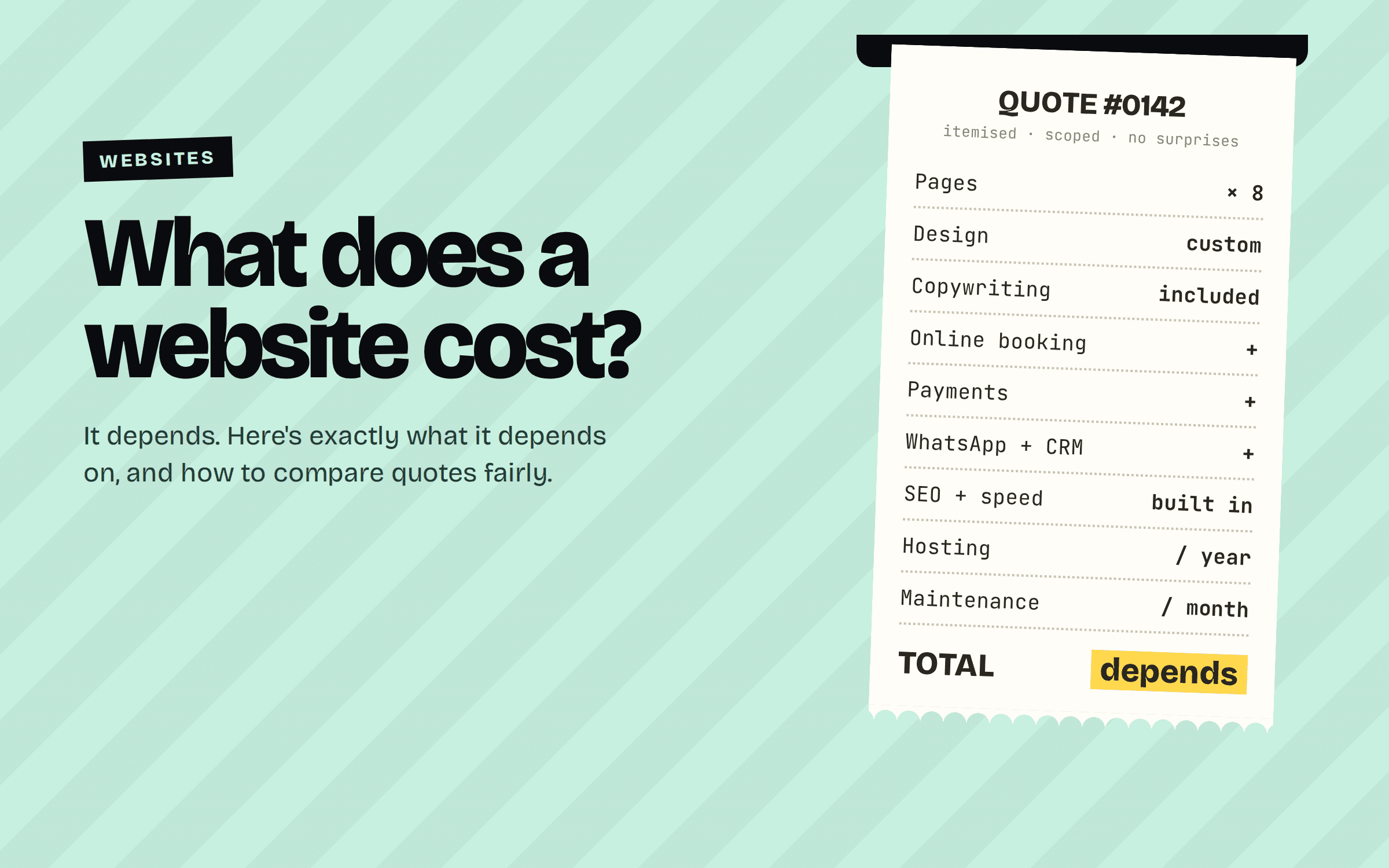
“How much does a website cost?” is one of those questions with an unhelpful honest answer: it depends. A one-page site built from a template and a custom platform with bookings, payments and integrations are different products, and they're priced very differently. Instead of quoting numbers that go out of date and vary by country and provider, this guide explains what drives the price so you can judge any quote you receive.
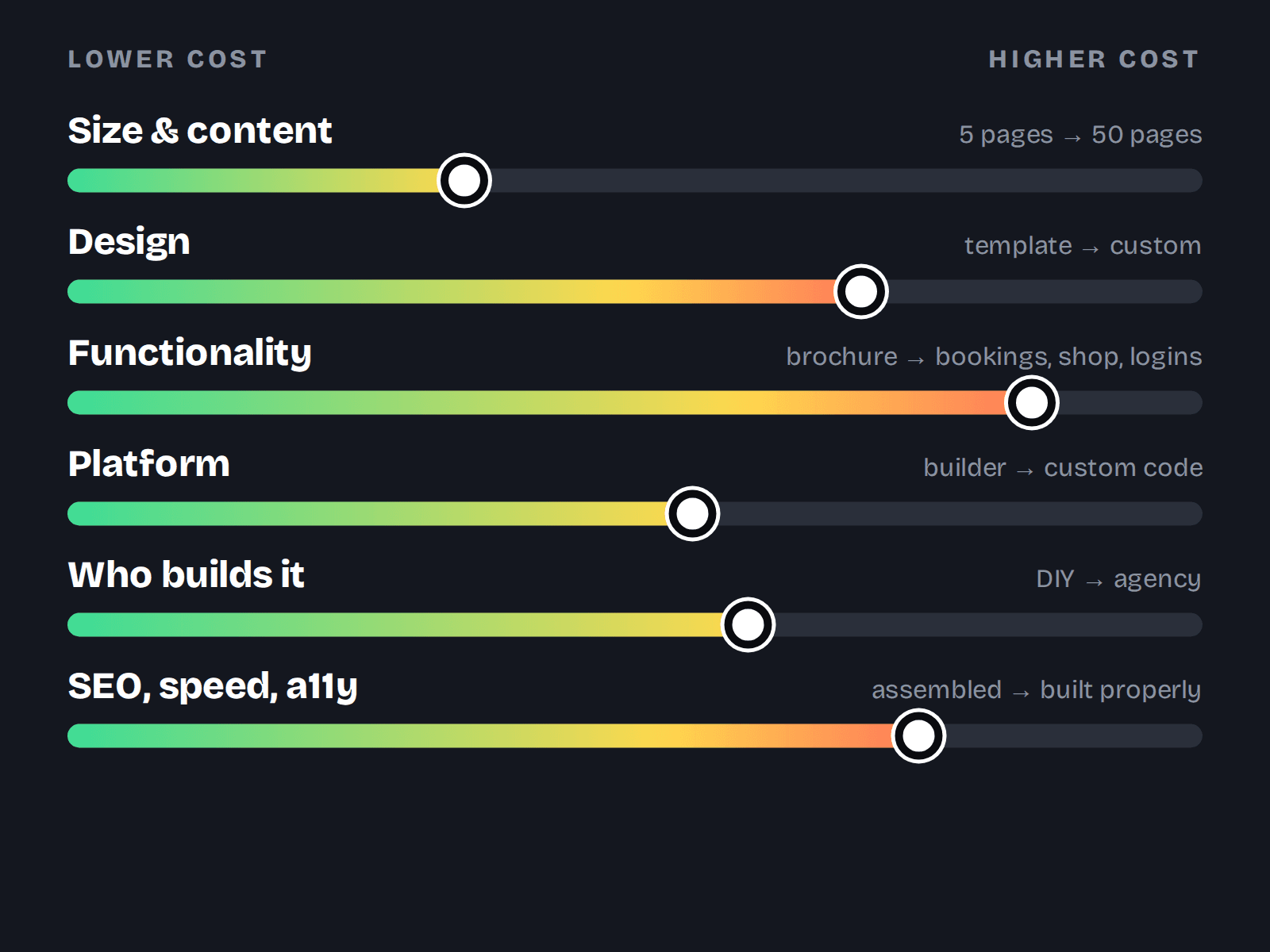
The main factors that set the price
1. Size and content
Five pages take less work than fifty. Content matters as much as page count: someone has to write the copy, source photos and organize everything. If you supply finished content, the cost falls. If the builder writes it, the cost rises.
2. Design: template or custom
A template or customized theme is quicker and cheaper, and it can look professional if the content is good. A custom design starts from your brand and goals, takes more time and suits businesses where the site is a core sales tool. Neither is automatically better; it depends on what the site needs to do.
3. Functionality
This is often the biggest driver. Each of these adds work:
- Online booking or appointment scheduling
- Online payments or an online shop
- Customer accounts and logins
- CRM, email or WhatsApp integrations
- Multiple languages
- Custom dashboards or calculators
4. Platform
Website builders, WordPress, and custom code each have trade-offs. Builders are fast to start but limit flexibility. WordPress offers a huge ecosystem but needs updates and security care. Custom-built sites give full control and tend to be fast, but cost more upfront.
5. Who builds it
A freelancer, a small agency and a large agency price differently, reflecting overheads, experience and the level of support. The cheapest quote isn't always the lowest total cost if it leaves out things you'll need later.
6. SEO, speed and accessibility
A site that's built properly from the start, with clean structure, fast loading and accessible design, costs more than one that's just assembled. It also avoids paying to fix those issues later. See our technical SEO launch checklist for what “properly built” includes.
The costs that come after launch
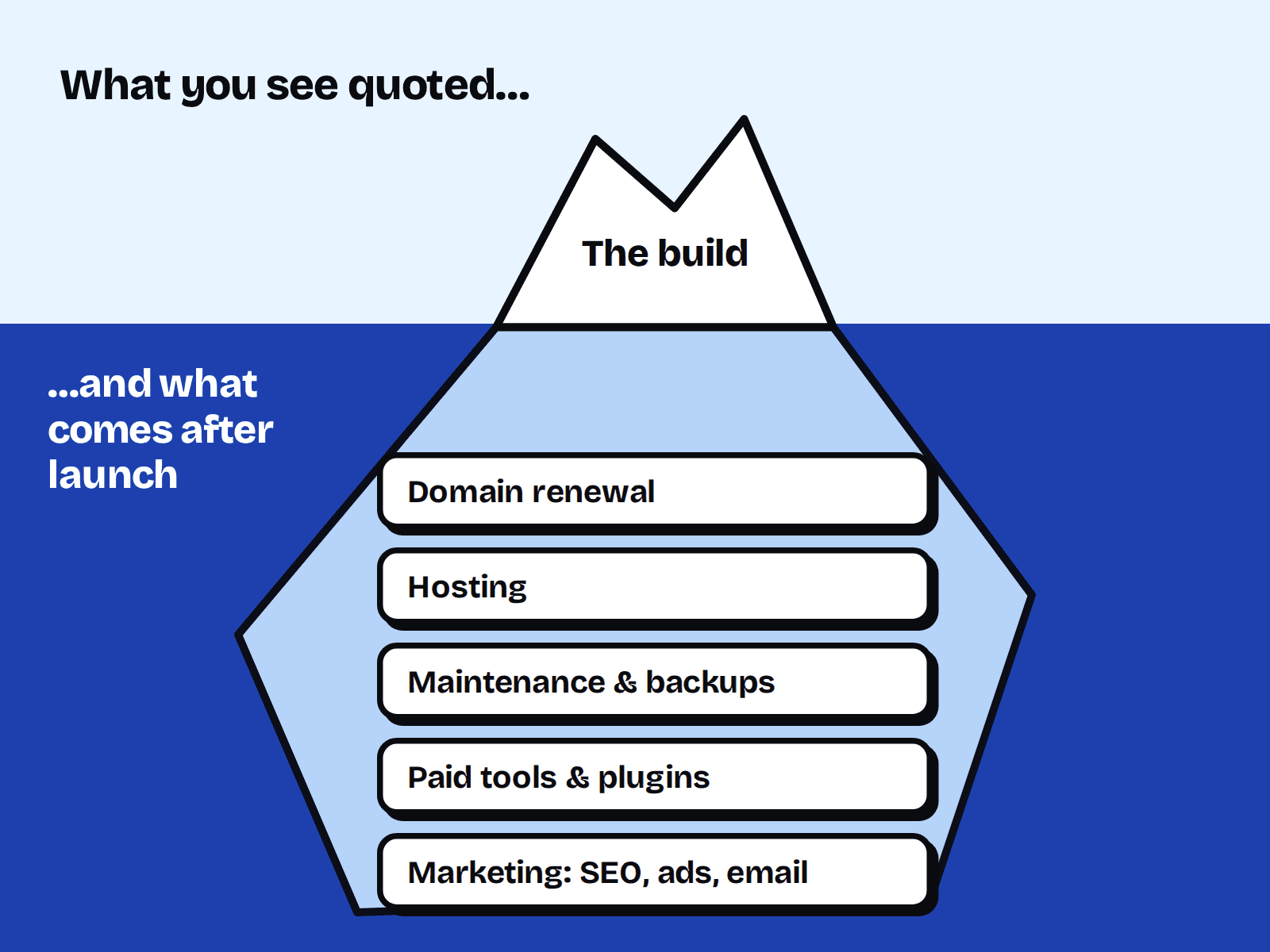
The build isn't the only expense. Budget for:
- Domain name: renewed yearly.
- Hosting: monthly or yearly, depending on the platform and traffic.
- Maintenance: updates, backups, security and small content changes.
- Paid tools: booking plugins, email platforms, or premium themes.
- Marketing: a website doesn't bring traffic on its own. SEO, ads and email all take time or money.
DIY, freelancer or agency?
- DIY with a builder: lowest cash cost, highest time cost. Good for simple sites if you're comfortable learning.
- Freelancer: flexible and often affordable. Check portfolios, references and what happens if they become unavailable.
- Agency: more roles under one roof (strategy, design, development, SEO) and usually higher prices. Best when the site is central to growth.
How to compare quotes fairly
- Give every provider the same brief: goals, pages, features, deadlines and examples you like.
- Ask for an itemized quote so you can see what each part costs.
- Check what's included: copywriting, images, SEO setup, mobile design, training, revisions.
- Ask who owns the site and whether you get the files and logins at the end.
- Ask about support: what happens in month three when something breaks?
- Look at past work, loaded on a real phone.
Warning signs
- A fixed price with no scope described.
- No mention of hosting, domain ownership or maintenance.
- Pressure to decide today.
- Promises of guaranteed first-page rankings. Nobody can honestly guarantee that.
How to keep the cost sensible
- Launch with the pages and features you need now, and add more later.
- Prepare your content, logo and photos before the project starts.
- Decide the single main goal (calls, bookings, sales) and design around it.
- Choose a builder who'll explain trade-offs, not just say yes.
Want a quote based on your actual needs? Our web development service starts with understanding your goals and scoping what's really necessary. Contact us with a short brief and we'll tell you what we'd build and why.
FAQ
Quotes differ because of scope, design approach, features, who's building and what's included. Comparing like with like requires an itemized brief.
Not always. A simple, well-built template site can be a great fit. Problems arise when a low price leaves out essentials like mobile design, SEO setup or support.
Usually yes. Hosting and the domain are recurring costs, though pricing depends on the provider and platform.
Small sites can take a couple of weeks, while larger or custom projects take months. Delays usually come from content and feedback, so prepare both early.
You should. Confirm in writing that you'll receive the files, domain and logins at the end of the project.
- #website cost
- #web development
- #small business