Shopify vs WooCommerce vs custom: choosing an ecommerce platform
The right online store platform depends on your catalogue, your team and how unusual your process is. A plain comparison of the three common routes.
By LEBX Team
Published
On this page
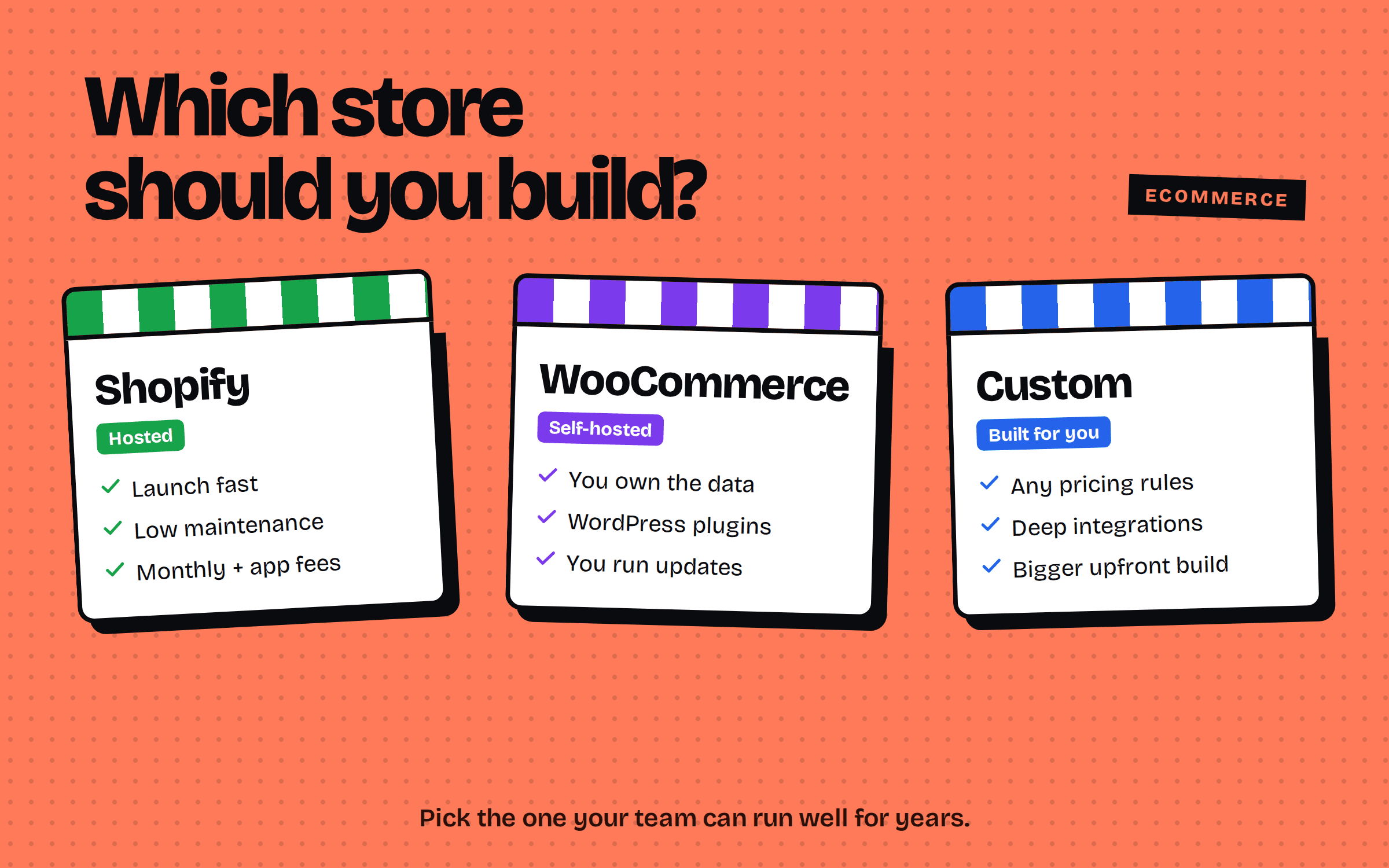
There is no single best platform for an online store. There is the one your team can run well for years. These are the three routes we are usually asked about.
Shopify: hosted and quick to launch
Shopify is a hosted platform, so security, hosting and checkout are handled for you. It suits businesses with a standard catalogue that want to launch fast and keep maintenance low. Trade-offs: monthly subscription, transaction and app costs, and less freedom over unusual logic.
WooCommerce: flexible and self-hosted
WooCommerce is a WordPress plugin. You own the hosting and data and can extend it widely. It suits teams already comfortable with WordPress. Trade-offs: you are responsible for hosting, updates, security and speed, and plugin stacks can slow the store.
Custom: full control, more upfront work
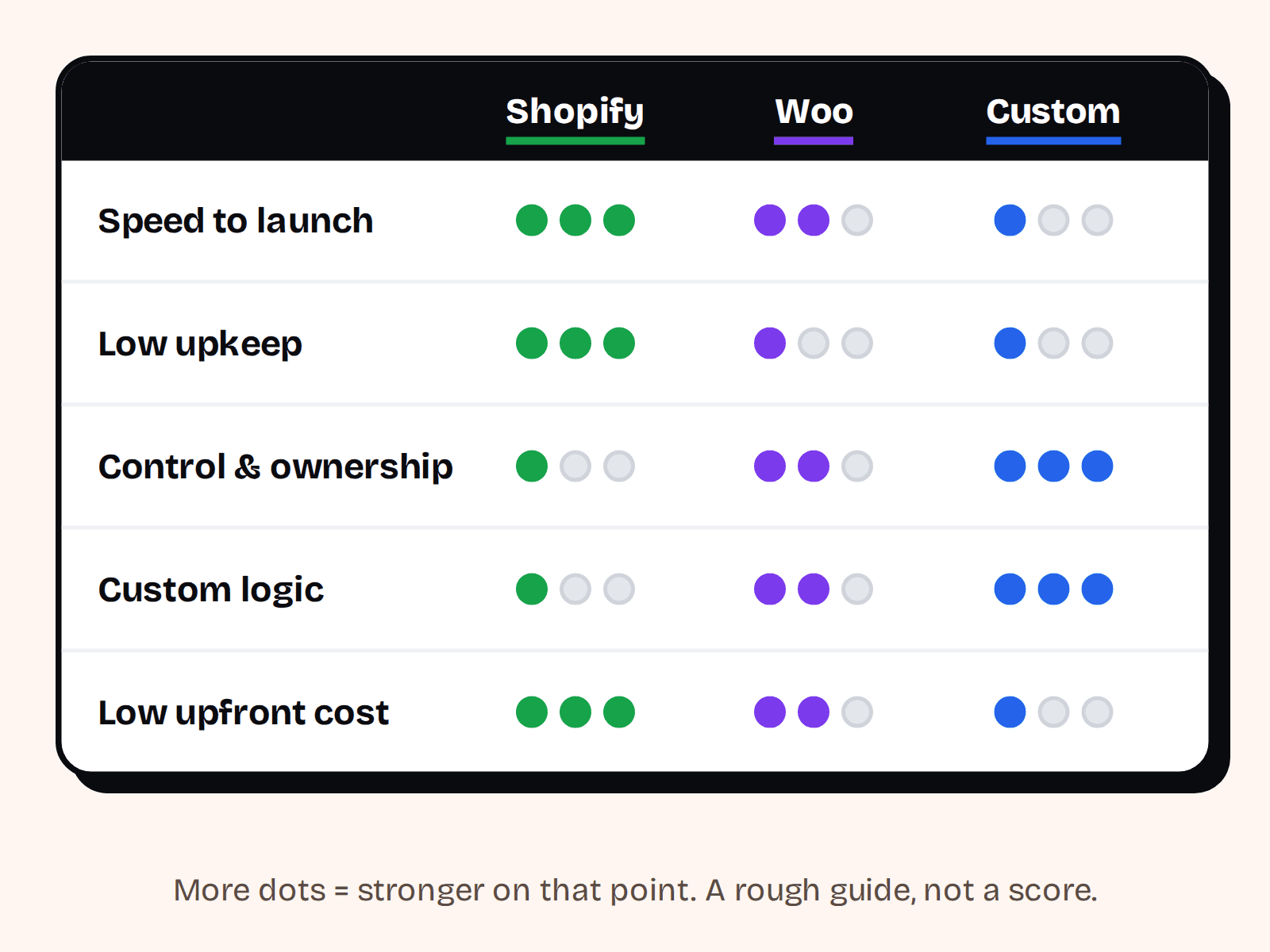
A custom store is built for your exact catalogue, pricing rules, integrations or customer journey. It suits unusual business models, heavy integration needs or when platform fees and limits become a constraint. Trade-offs: higher build effort and you need a team to maintain it.
How to decide
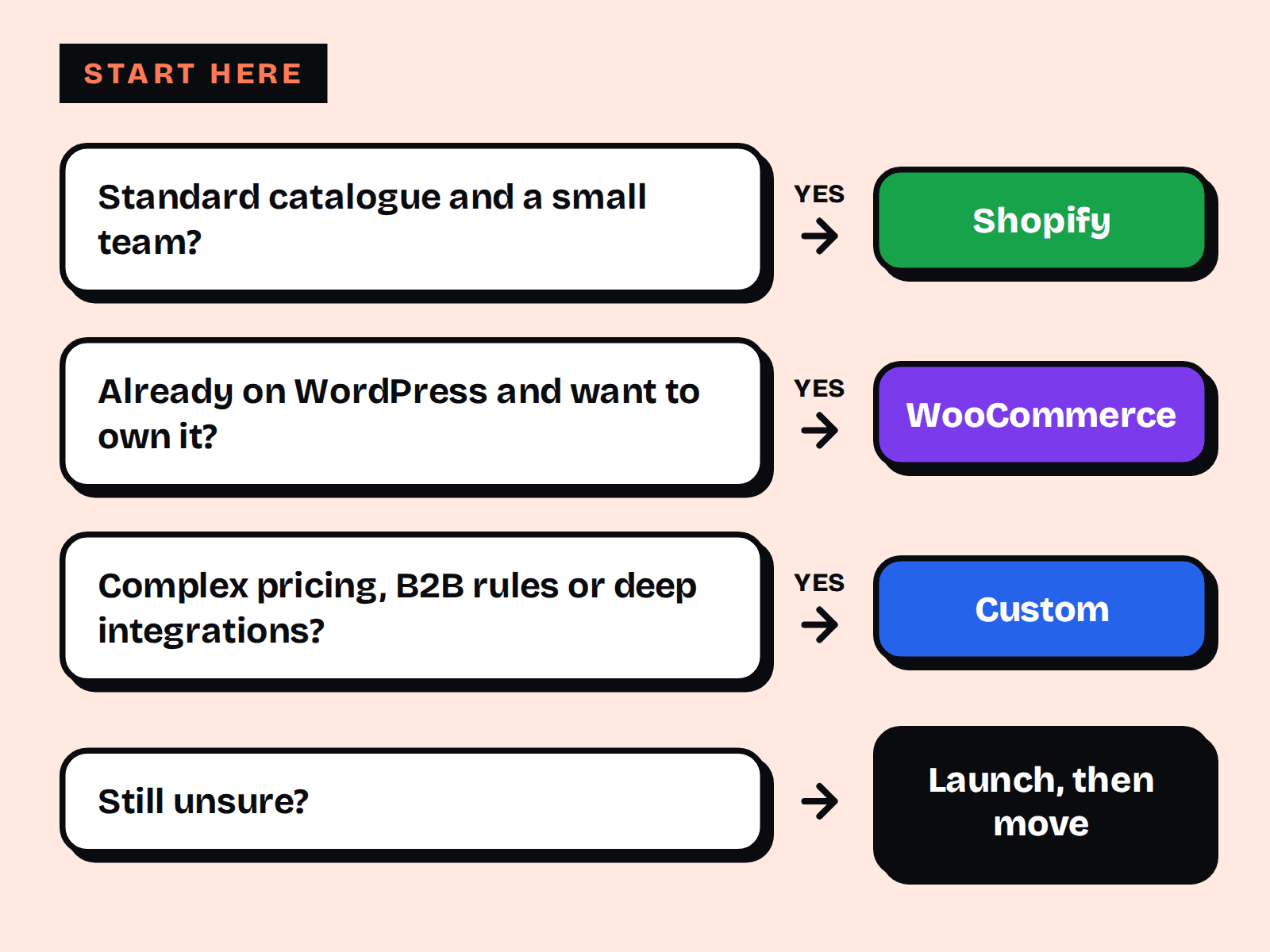
- Standard catalogue and a small team? Start with Shopify.
- Already on WordPress and want ownership? Consider WooCommerce.
- Complex pricing, B2B rules, or deep integration with inventory, billing and WhatsApp? Consider custom.
- Unsure? Launch on a platform and move later only if you hit a real limit.
Whatever you choose, get these right
- Fast mobile pages. Most shoppers browse on phones.
- A short checkout with the payment methods your customers use.
- Clean product URLs, unique product descriptions and product structured data so search engines understand your catalogue.
- Order confirmation and status messages by WhatsApp or email.
- Stock and billing connected, for example through LEBX Desk.
Our ecommerce development service covers all three routes and recommends one based on fit. For a rough idea of budget, see how much a business website costs.
FAQ
Shopify is simpler to run because it is hosted; WooCommerce offers more ownership and flexibility if you can maintain WordPress. The better choice depends on your team.
When your pricing, catalogue or integrations are unusual enough that platforms need heavy workarounds, or when platform fees and limits outweigh a one-off build.
Yes, though migrations take planning for products, customers, orders and redirects so search rankings are not lost.
It can be if built with clean URLs, fast pages, structured data and original product content. Rankings cannot be guaranteed.
- #ecommerce
- #shopify
- #woocommerce
- #web development